Davy Crockett: March 6, 1836
We have put together an all-star cast for Congressman Davy- a musical journey that revisits the political career of Davy Crockett that I have written with Dean Schlabowske. Find out how you can help us tell Crockett's amazing but true tale later this spring!
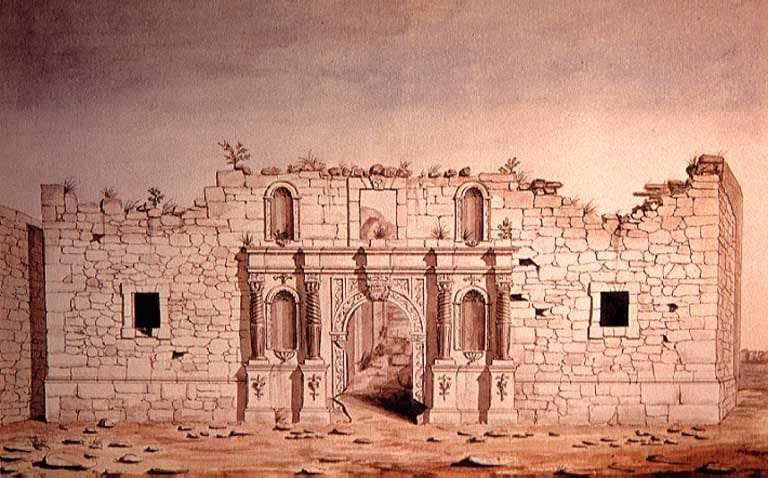
Everybody remembers the Alamo – the rickety mission in San Antonio defended by a handful of Texas revolutionaries in 1836. Their makeshift fort fell to the forces of Mexican president Antonio López de Santa Anna 190 years ago this morning
But what do we actually know about what happened in the predawn darkness that day?
In many ways, it is not that we lack information – including eyewitness accounts. That might indeed be the problem. These various accounts conflict in key aspects, and they have been dissected by scholars for decades.
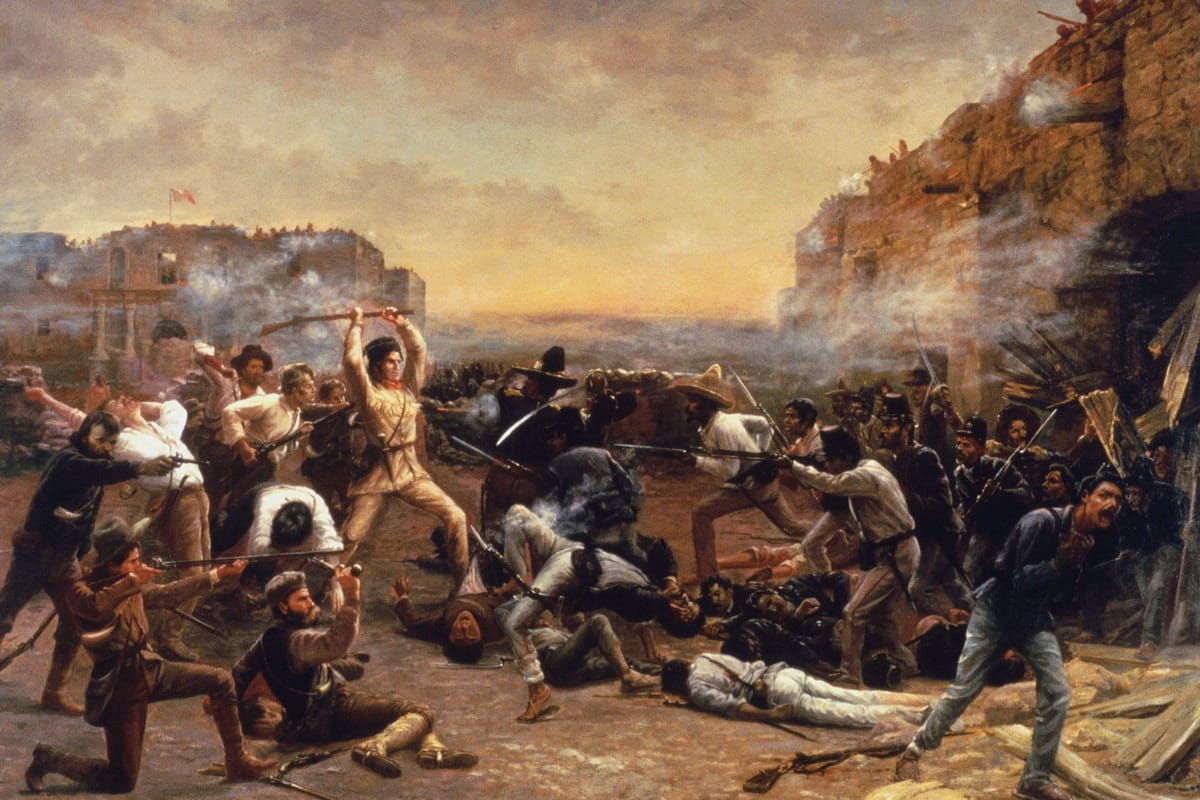
Part of what historical research has revealed is that while the doomed stand of a band of men against overwhelming odds that morning was heroic in a conceptual sense that has attained mythical status, the actual battle itself has been presented in ways that place it beyond recognition. (See the Robert Jenkins Onderdonk painting above.)
The Alamo’s defenders were fatigued and chilled to the bone before sunrise on March 6, 1836. The mission complex was much too large for the small force assembled there, so its defenses were threadbare. Over the course of a siege, Mexican artillery was caving in the adobe walls as its cannons drew closer. The bombardment that was so effective that subordinate officers counseled Santa Anna that no assault would be necessary. Just wait the Texans out until they were pounded into submission.
But Santa Anna wanted a bloody display of force on March 6, 1836. He got it. While the assault on the Alamo broke down into a melee under withering fire from its defenders, sheer force of numbers quickly subdued the fort itself. Casualties mounted as the attackers sought to put all of the Texan forces to death – and even killed each other with friendly fire. It was a relatively short and exceedingly grim battle that left no armed survivors among the defenders.
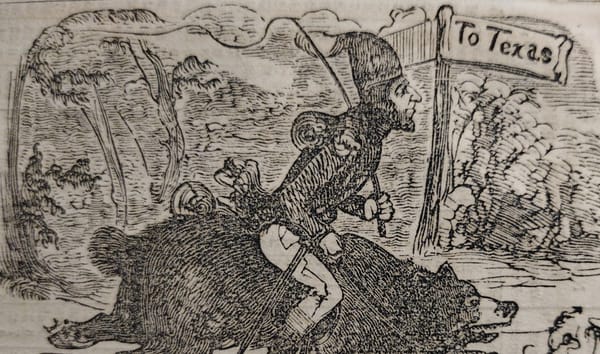
Davy Crockett was among the 186 men who chose to stay and fight it out in San Antonio. As I have noted in an earlier essay, he ended up in Texas largely because of his own bitter reaction to his narrow defeat in an 1835 reelection campaign for his seat in the U.S. House of Representatives.
When his constituents didn’t vote him back in, Crockett famously stated that they could go the hell and he would go to Texas. Yet while his final fate was determined on March 6, 1836, the continuing controversies over how he perished are perhaps the bitterest disputes in the entire saga.
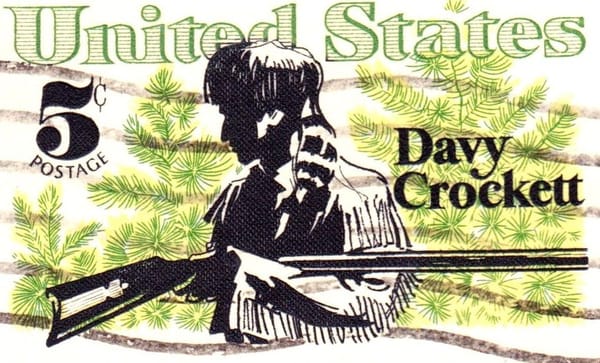
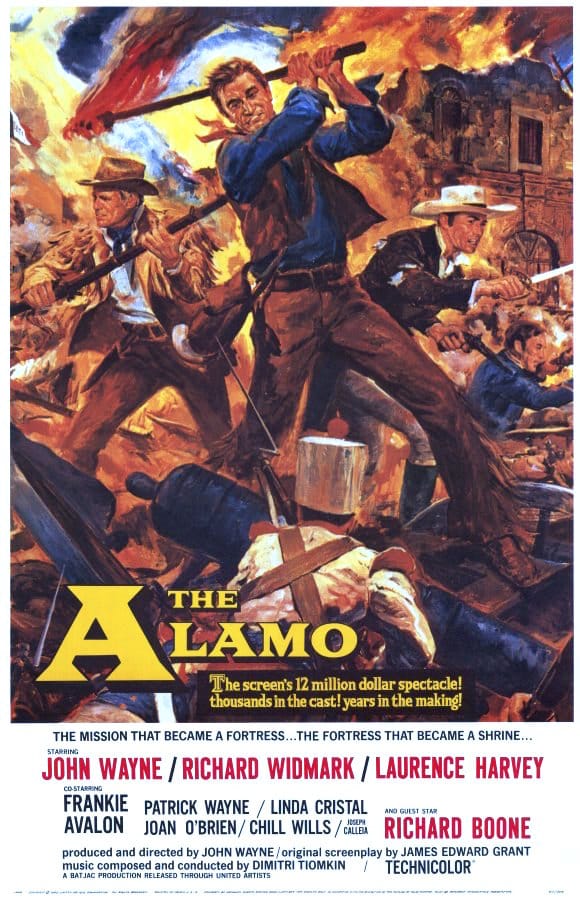
The media machinery that transforms men into legends largely has portrayed Crockett dying bravely in battle since immediately after the battle – and well into the 1960s. He is often depicted as swinging his rifle ‘Ol Betsey like a club as the Mexican soldiers engulf the mission.
Some eyewitnesses to the events of that day state that Crockett’s body was identified among the dead defenders, displaying signs of wounds and mutilations.
Yet early accounts from the Mexican side of the battle first brought to light in the 20th Century offer a startling opposing view: Crockett surrendered and was shot dead after the battle had concluded.
The most notable of these alternative sources is offered in a lengthy and highly-detailed account of the military campaign by José Enrique de la Peña – an officer attached directly to Santa Anna’s campaign and present at the Alamo battle. His account states bluntly that Crockett survived the assault and placed under the protection of General Manuel Fernández Castrillión.
As prisoner, Crockett was taken before Santa Ana, who ordered his execution. It is a deed that de la Peña describes in chilling detail:
[S]everal officers who were around the president and who, perhaps, had not been present during the moment of danger, became noteworthy by an infamous deed, surpassing the soldiers in cruelty. They thrust themselves forward, in order to flatter their commander, and with swords in hand, fell upon these unfortunate, defenseless men just as a tiger leaps upon his prey. Though tortured before they were killed, these unfortunates died without complaining and without humiliating themselves before their torturers.
The debate over Crockett’s demise has become a fierce polemic. One of the most recent books of tackling aspects of the controversy by Allen J. Weiner (David Crockett in Texas) comes down firmly on the side of his being killed in battle.
Weiner is the co-author of the landmark study of Crockett’s time as a U.S. legislator (David Crockett in Congress) and he sifts through the dueling accounts with an eye to contradictions in contemporaneous accounts. In his view, the evidence suggests that Crockett died in battle – even if there were other survivors and executions.
My own reading of the evidence is that something very unusual and very unhappy occurred at the end of the battle and in its aftermath. The untidiness of the narrative is significant.
And when these scraps of contradictory information are measured against documentation about Crockett’s character and actions in the final years of his life? The question is far from settled.
The notion of Crockett dying bravely in battle aligns tightly with his deep sense of principle, matched with his personal tenacity, resilience, and bravery. Indeed, it is often forgotten that while Crockett was a fierce critic of Andrew Jackson, he was among the witnesses who subdued the president’s would-be assassin at the U.S Capitol on January 30, 1835. (It was the first attempt to assassinate a sitting president.)
Yet another exceedingly dominant strain of Crockett’s personality in the 1830s was his ready embrace of his own burgeoning celebrity. His exploits as a bear hunter and frontiersman helped propel him to public office in the late 1820s. When he lost a reelection bid in 1831, the subsequent national acclaim that surrounded him as a result of Lion of the West – a play based on his persona – carried him back to Washington City for a third term.
Once there, Crockett’s delight in his fame – and willingness to expand it – become a sort of Achilles heel that led directly to his fall from power. He undertook a campaign-style tour of the Mid-Atlantic and Northeast states in 1834, giving public speeches to throngs of excited supporters. It was a dizzying success as political theater and Crockett was feted with dinners and gifts as Congress sat in session without him.
A few votes may have been missed, and Crockett’s Tennessee constituents certainly took notice the following year.
I remain startled by the passage in de la Peña’s work describing Crockett – which has the ring of a man accustomed to trading on his wits and celebrity to pave the way out of any and all tight scrapes:
Among [the survivors] was one of great stature, well proportioned, with regular features, in whose face there was the imprint of adversity, but in whom one also noticed a degree of resignation and nobility that did him honor. He was the naturalist David Crockett, well known in North America for his unusual adventures, who had undertaken to explore the country and who, finding himself in Béjar at the very moment of the surprise, had taken refuge in the Alamo, fearing that his status as a foreigner might not be respected.
Tracking Crockett’s journey to the Alamo and the various permutations of his demise underscores the continuing power of American myths. Yet interrogating these legends has a particular power as well.
In this case, despite the lack of any final conclusion, reflecting upon Davy Crockett as a man as well as the legend may help us better understand what happened to him that morning of March 6, 1836 – and why.
Not a subscriber to Stage Write? Sign up here. It's free – and it will stay that way.
Read more about my work at my website. More about Congressman Davy here.