Forgotten Man: Exploring the Mysteries of Ernst Toller’s Death
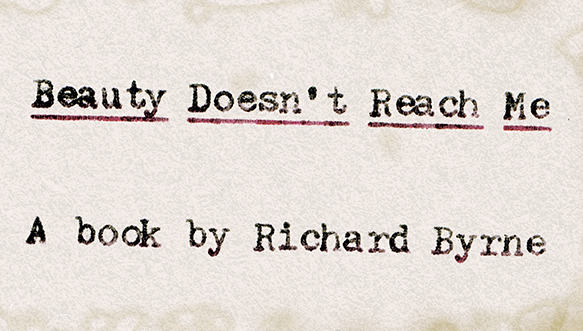
This is the first in a series of essays written to coincide with the publication of Beauty Doesn’t Reach Me (We Heard You Like Books). Order a copy now.
Antifascist playwright, poet and activist Ernst Toller is not a familiar name in 2026. Yet when he committed suicide in Manhattan’s Hotel Mayflower on May 22, 1939, Toller’s death created headlines around the world.
During his lifetime, Toller’s plays had been performed on every continent save Africa and Antarctica. His literary fame was equaled only by his reputation as the greatest literary enemy of the Nazi regime. Toller’s public opposition was such a thorn in the side of the Third Reich that Joseph Goebbels attacked him by name. A short passage from an essay published after his death offers a taste of his profound and pungent eloquence:
Nazi propaganda is poisoning not the German people alone. With great cunning and immense supplies of money they are sending out those poisonous germs into all the other countries in order to prepare a world epidemic of spiritual madness. Man is menaced. The foundations of civilization are menaced.
In late May 1939, a devastating world war instigated by the Nazis was only three months away. So the suicide of such a prominent opponent of fascism seemed inexplicable in any terms other than a loss of faith in the cause, or even cowardice. Police quickly ruled out murder as a cause of death, but suspicions that Toller was killed by others (including the Nazis) lingered long after his suicide.
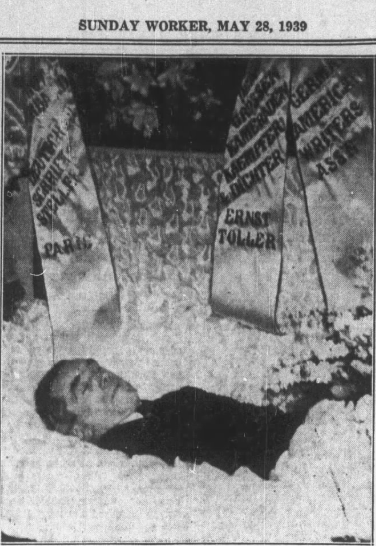
Toller did receive a Broadway send off, as hundreds of mourners jammed the chapel of Campbell’s Funeral Home on May 27, 1939. Yet the celebrated playwright and activist was fading already from history as his mourners dispersed. Only three persons – including his cousin, Else Toller – attended his cremation.
What people did remember of Toller’s demise was the bad vibrations surrounding his suicide and funeral. It was a week that elicited a spasm of rage, guilt, anger, grief, and despair in left-wing politics around the world. This was especially true in New York City, where German political emigres already were starting to forge their new lives in a strange metropolis. Toller's death was a topic better avoided altogether than recalled in any way.
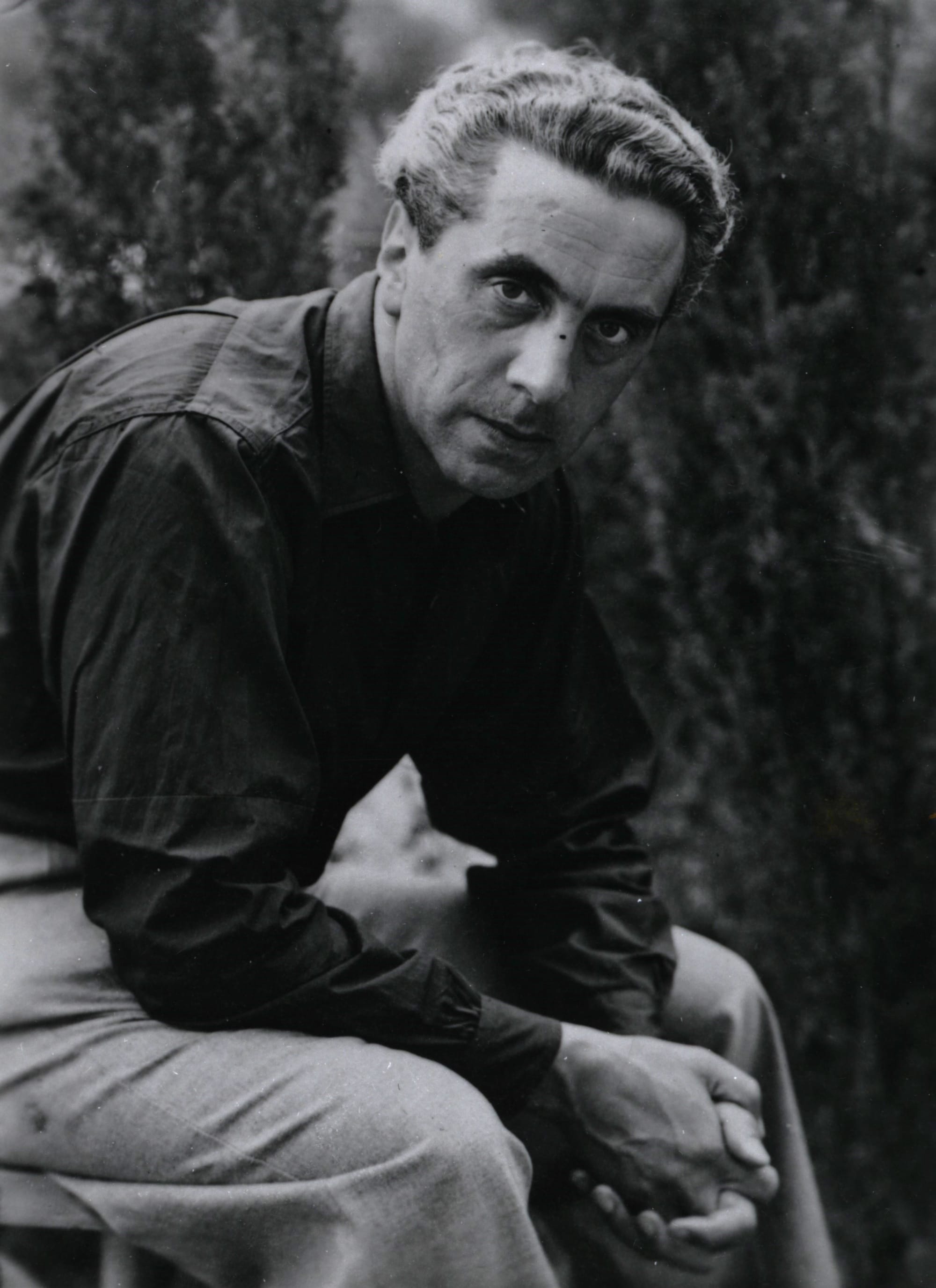
I wrote a play called Hotel Mayflower a few years ago. It was about the intersection of Toller’s life with two other people: Beat Generation writer William Burroughs and his first wife, Ilse Burroughs. (William married Ilse to help her escape from Europe in 1937. When she arrived at last in New York in January 1939, she became Toller’s secretary.)
As I researched the play, I discovered that one of the few remaining objects associated with Toller’s suicide was a death mask in the collections of the Leo Baeck Institute (LBI) at the Center for Jewish History. When I first went to look at the object, no one knew who had made it. Pressed into the clay was a single name and a date” “Hesketh, ’39.”
The death mask lingered with me after I finished Hotel Mayflower. I thought that knowing more about might would shed new light on Toller, his death, and that terrible week about which no one wanted to speak.
So I started investigating who made Toller’s death mask, and just how it came be part of the LBI’s George L. Mosse collection. My journey took me to a number of archives in the United States and Europe to unravel a tangled story of celebrity, politics and psychiatric controversy. I even uncovered the origin story of the anti-comic book movement of the 1950s.
What I discovered on that quest became the foundation of my new book, Beauty Doesn’t Reach Me. Resolving many of the persistent mysteries surrounding Toller’s death mask opened up a window into a complex, fascinating, and often fractious mid-century America. It was a intellectual landscape in which political and scientific controversies intersected powerfully with the nation’s literary and artistic culture.
I also was seeking an answer to another question: Why did Toller’s reputation dim so greatly after his death, when other German playwrights and authors of that era became postwar cultural icons?
What are some of the new revelations about Ernst Toller that you will encounter in Beauty Doesn’t Reach Me?
- Toller’s health was in a precarious state in 1939. Crippled by anxiety and depression, the playwright was treated by no fewer than three psychiatrists in the final few months before his suicide. One of these doctors was a polarizing figure who treated him with a insufficiently-vetted and controversial therapy in a private hotel room, rather than in the safety of a psychiatric clinic.
- A dazzling literary career on the rocks. Toller was one of the first German authors to receive a lucrative contract with a Hollywood studio. Yet he did not renew it, choosing instead to move back to New York City and focus on literature and politics. Though his spoken English was excellent, and he became a powerful public speaker, his command of written English was not as advanced. He despaired of writing new work, and controversies – including problems with translations and accusations of plagiarism – bubbled out of public view.
- Inner workings of Toller’s funeral committee revealed. German émigré psychiatrist Fredric Wertham’s Library of Congress papers attracted immense attention when they were opened to the public in 2010, as scholars sought new information on his anti-comic book crusade of the 1950s. Largely ignored in a voluminous mass of new materials were a set of files that Wertham created as the leader of Toller’s funeral committee. These papers offered a wealth of new detail about the week after the playwright’s suicide – including quarrels between notable personalities over the tenor and direction of the services for the dead writer.
- A callous disregard for his cremated remains. More than two years after his death, a family member and a close friend made a terrible discovery: The funeral committee in charge of Toller’s funeral and cremation neglected to properly inter his ashes. They were being kept in an envelope at a large cemetery in Westchester County.
- Toller’s suicide: Personal calamity not political despair. Those in close proximity to Toller’s death agree that it likely was not intentional act or a statement of political despair. Rather, it was a desperately ill man’s risky cry for help gone terribly awry. As one writer close to Toller wrote a few days after his death:
...[Toller’s death, as much as the poet’s suffering was typical for our time, didn’t come from a fighter’s desperation about his final fight, but from a highly individual collision of complex difficulties.
I am hoping that Beauty Doesn't Reach Me adds further momentum to a decades-long movement to reassess Toller's achievements. I also hope it might banish some of the darker shadows around his demise. As the world contends with resurgent tides of fascism, Toller’s writings seem more important than ever.
Check out my personal website and the We Heard You Like Books website for more information, including how you can buy Beauty Doesn’t Reach Me.
Not a subscriber to Stage Write? Sign up here. It's free – and it will stay that way.