Hesketh: An Artist Lost & Found
This is the third in a series of essays written to coincide with the publication of Beauty Doesn’t Reach Me (We Heard You Like Books). Order a copy now.
My new book, Beauty Doesn’t Reach Me, would not exist without Florence “Hesketh” Wertham.
Hesketh – who preferred to be called by that name throughout her life – made the death mask of antifascist playwright and activist Ernst Toller which is at the center of my book. She fashioned it only a few hours after the writer’s suicide on May 22, 1939.
This object now resides at the Leo Baeck Institute (LBI) at the Center for Jewish History, but its history is a curious one. Until recently, it was a mystery how the death mask ended up in the LBI’s George L. Mosse collection. The voluminous papers of Hesketh’s husband, Fredric Wertham, in the Library of Congress do not mention it. And despite the fact that the death mask was in private hands in 1979, an image of it sourced elsewhere was published in a book about Toller that year.
Yet as I discovered in my research, the mysteries ripple far past the object itself. Most immediately, they extend to other works of art fashioned by Hesketh for which Toller was the subject. These sculptures were presumed to be lost.
Indeed, one central mystery in the tale of the death mask is why Hesketh – a woman artist of growing renown in the 1940s – suddenly withdrew entirely from public showings of her work until and beyond her death in 1987.
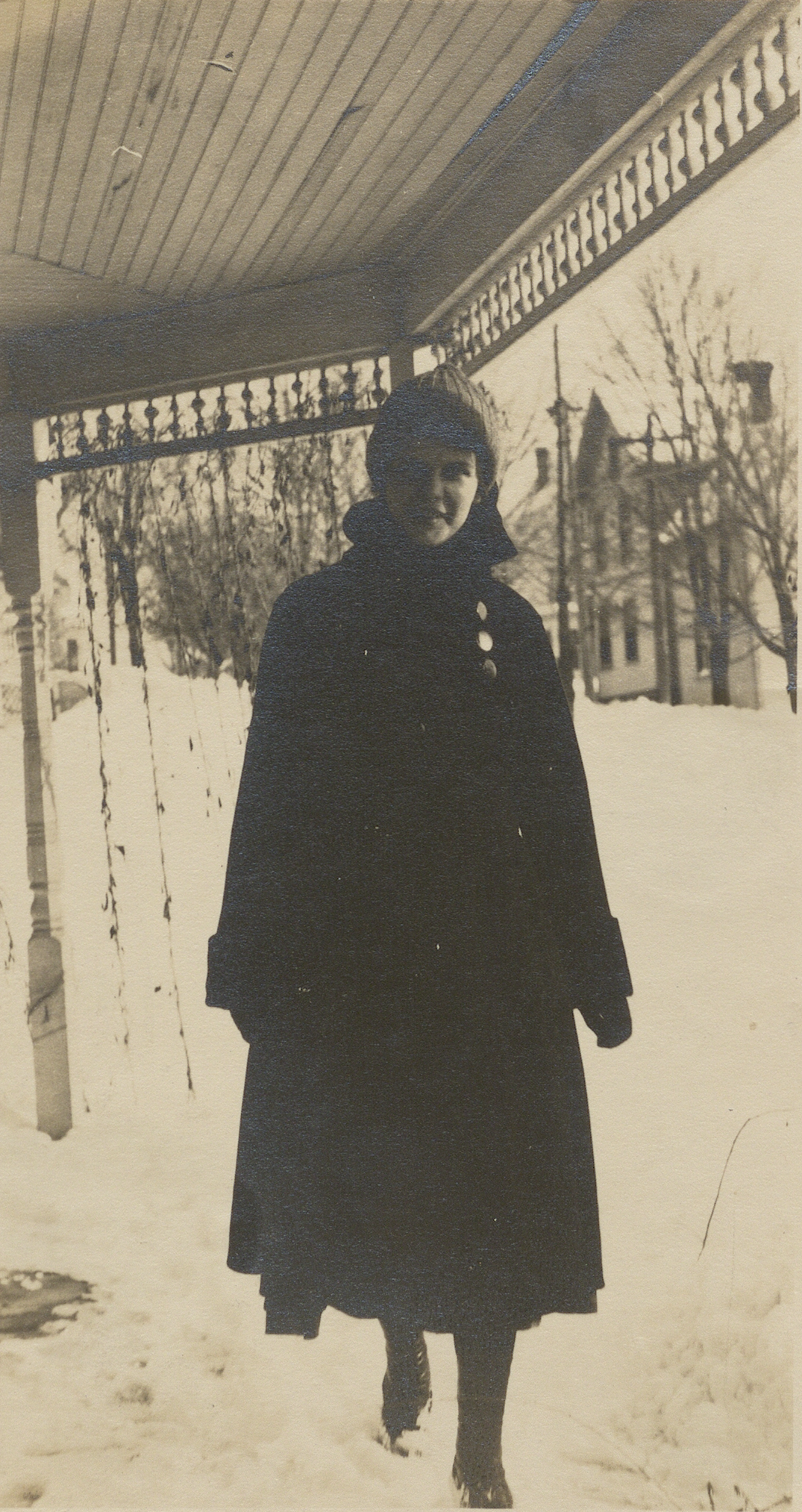
Hesketh was born in in 1902 in Portland, Maine. She attended Wellesley College and majored in zoology and physiology, graduating in 1923. Her undergraduate academic interests in science and art blossomed in postgraduate work in Baltimore, first at Goucher College, and then as a research assistant in medicine at Johns Hopkins University.
She met Fredric Wertham at the university, where he was working as a psychiatrist in the Phipps Psychiatric Clinic. They quickly become close collaborators. Hesketh’s scientifically-precise drawings were a key element in their shared work.
In 1926, the couple published a monograph – The Significance of the Physical Constitution In Mental Disease. The couple’s second and final co-authored volume was a groundbreaking 1934 work: The Brain as an Organ: Its Postmortem Study and Interpretation. Hesketh not only contributed over 150 illustrations to the book, but she also wrote key technical chapters.
Sometime in the 1939s, Hesketh began to pursue a career as a sculptor. The paper trail of her artistic career is unhappily thin, and demand supplementing a heavily-curated version of her work in the Library of Congress with long-neglected press notices and review.
An October 1939 profile of Hesketh in Wellesley College’s alumnae magazine observes:
She has a studio in New York, and she carves direct in stone: marble, limestone, granite, sandstone, etc. On the wall of hers studio are these words from Chaucer: “The life so short, the craft so long to learn.”
A small but revealing bit of correspondence in the Wertham papers attests to a close – if somewhat turbulent – student/teacher relationship with noted American sculptor John Bernard Flannagan (1895-1942). This connection is especially underscored by the mention of “direct carving” in the Wellesley profile; Flannagan was an innovative American practitioner of this technique.
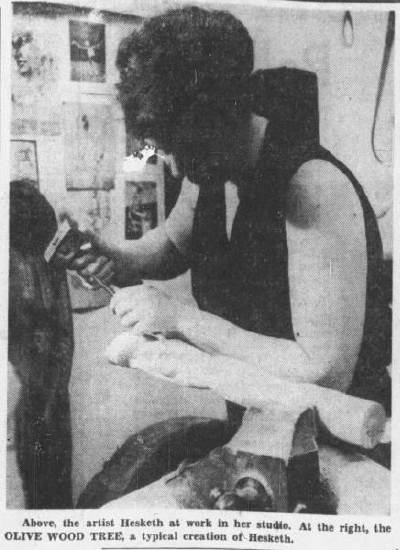
The Library of Congress files include the Wellesley magazine profile, as well as two catalogues of Hesketh’s one-woman shows at Cosmopolitan Club (Philadelphia, 1946) and Ferargil Galleries (New York, 1947).
The Ferargil catalogue also offers a comprehensive list of Hesketh’s public exhibitions between 1940 and 1946. In the late summer of 1946, she was included in a Five Major Works exhibition with Frank Stella and Willem de Kooning at the Egan Gallery in New York City.
Searching for her in newspapers of the era yields something richer and more intriguing. One notable element skipped over in the LOC's Wertham papers is Hesketh’s position as an innovator in materials in the 1940s. Her work in plastic was a novelty that attracted particular attention. The Daily World asserted bluntly in 1943 that Hesketh was the “first modern sculptor to carve directly into the new modern material ‘Plastic.’”
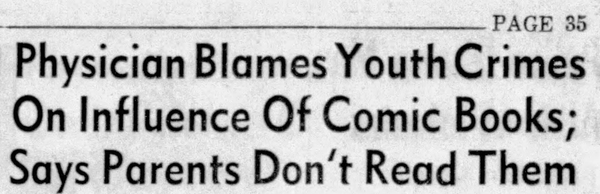
Nowhere in Wertham’s papers is there any clue as to why Hesketh abruptly stopped exhibiting her work in the early 1950s. Indeed, she never showed work in public again. Yet is hard to ignore that this development did coincide with Wertham’s emergence as a prominent (and controversial) national figure who was leading a public crusade against the societal ills created by comic books.
What is clear from looking at old newspapers is that Hesketh’s sudden vanishing was not occasioned by bad reviews. Her work received consistently excellent notices. In the May 4, 1947 New York Times, critic Howard Devree observed:
[Hesketh] has arrived at an individual idiom in her blending of traditional and modern elements…. Rhythmic fantasy is an important factor in her work, which is vivacious and uncompromising and reaches out for something beyond the actual achievement.
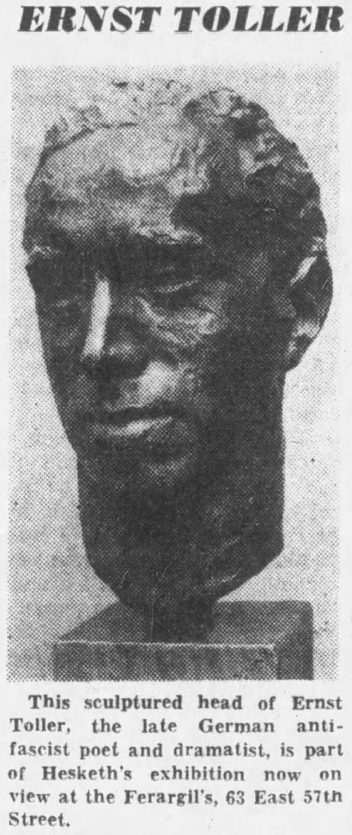
My quest also led me to the rediscovery of Hesketh works – in addition to the death mask – that featured Ernst Toller as a subject.
These works were not part of the public record that she left behind in the Wertham papers. But when you survey her work in its totality, this is perhaps not surprising.
Hesketh’s sculptures were inspired by mythic themes. They sought to bend form beyond mere representation. Toller’s death mask is an outlier – an object fashioned within a strongly‑established tradition. The three busts of Toller that Hesketh created after his suicide which I uncovered in my research are works in a similar vein.
These objects featuring Toller as a subject also are not a part of any surviving catalog of Hesketh’s work. Indeed, there is an increasing body of evidence that both Hesketh and Fredric Wertham actively sought to suppress her identity as their creator for decades after they were made.
So there is considerable irony in the fact that it was only signed photographs of the death mask and one of the busts sent by Hesketh in 1941 to Toller’s former lover, Luise Mendelsohn, that allowed me to confirm her identity as the artist who made these works.
That image of the Toller bust led me to newspaper accounts of its appearance in an exhibit of Hesketh’s work. But it also enabled me to track down the original sculpture to Allentown, Pennsylvania, which is close to Bluehills: a Lehigh Valley farm which the Werthams purchased as a retreat in 1949.
Hesketh’s career has stayed largely under the radar since the 1950s. A few museums possess a single piece of her sculpture. Yet her fashioning of a death mask of Ernst Toller in the tumultuous hours after the playwright’s suicide may be the start of a significant reassessment of what remains of her work – despite her own best efforts to keep her art obscured.
Check out my personal website and the We Heard You Like Books website for more information, including how you can buy Beauty Doesn’t Reach Me.
Not a subscriber to Stage Write? Sign up here. It's free – and it will stay that way