Powers We Pretend to Understand

This is the fourth and final essay in a series written to coincide with the publication of Beauty Doesn’t Reach Me (We Heard You Like Books). Order a copy now.
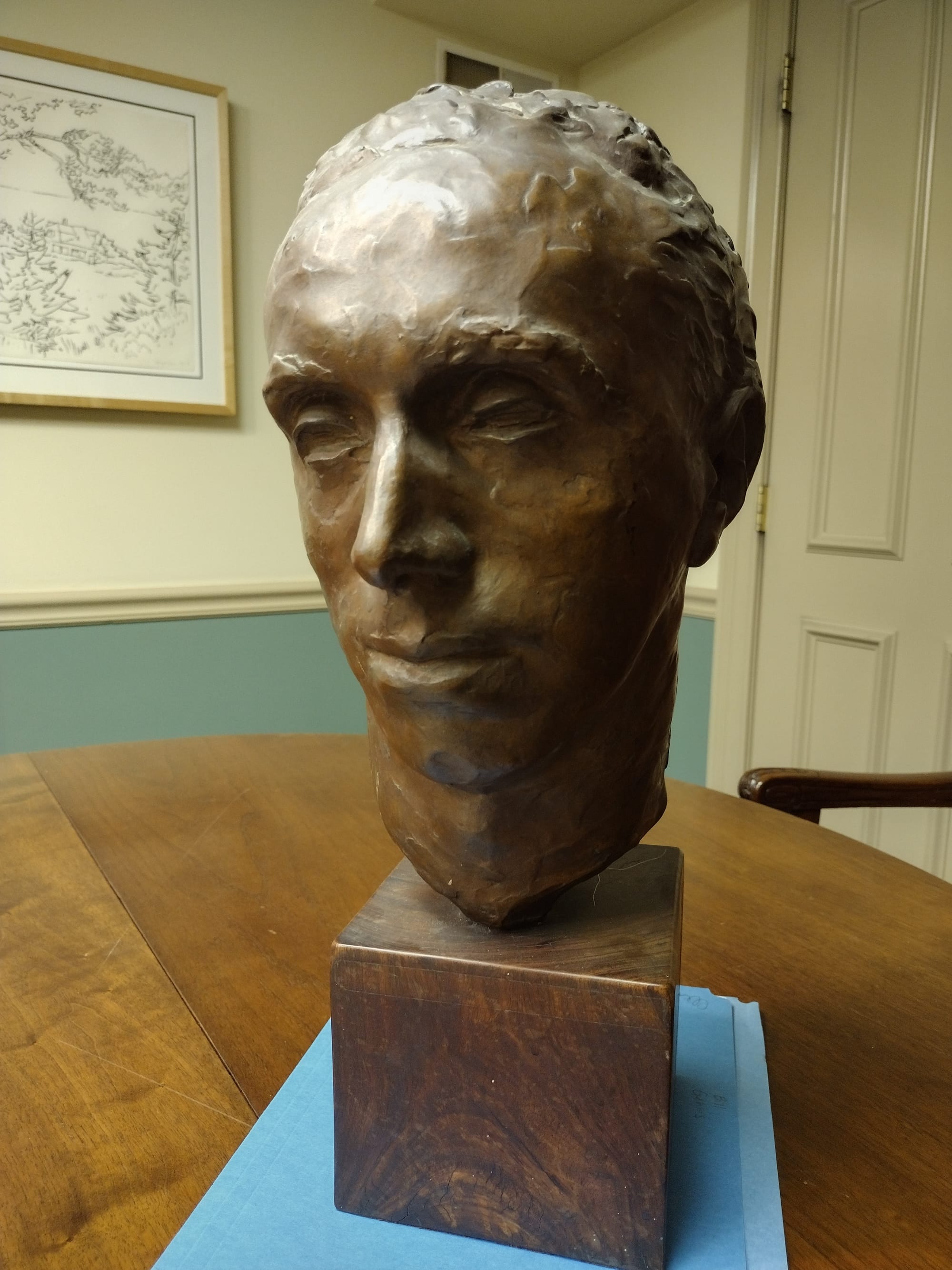
One of the things I discovered quickly as I started to research the death mask of antifascist playwright and activist Ernst Toller for my new book, Beauty Doesn’t Reach Me, was the black and seemingly-bottomless shadow that hung over his suicide on May 22, 1939 and the week of public mourning that followed it.
Toller's fervent defense of human liberty against the fascism which made him an exile in 1933 was heroic. He was attacked by name by high officials in the Nazi regime, and his call for a broad coalition to battle totalitarianism was extraordinarily prescient.
The playwright's unflagging public energy made his suicide in the midst of the struggle was inexplicable to the broader public. His work extended far beyond battling the political fallout of fascism. He spent the final few months campaigning for his initiative to combat the hunger inflicted upon Spain by the combatants in its civil war.
As a public man, however, an explanation was sought – and ultimately, settled – in terms of politics and the furies of the public square. Toller was flawed. Weak in a crucial way. Perhaps even a coward. The impulse to slink quietly away as soon as the rituals of public eulogy were fulfilled was overwhelming.
Mere hours after a lavish Broadway sendoff which drew hundreds of mourners (as well as political and literary luminaries), the process of forgetting and shaming was underway. Only three people attended his cremation the day after the gala funeral. His ashes remained in an envelope for more than two years.
W.H. Auden’s equivocal and condescending poem – “In Memoriam: Ernst Toller” – appeared in The New Yorker only three weeks after the playwright’s death and captured perfectly the growing consensus.
Auden calls Toller “egotistical and brave,” speaking to him throughout the poem as one might speak to a toddler:
What was it, Ernst, that your shadow unwittingly said?
O did the child see something horrid in the woodshed
Long ago? Or had the Europe that took refuge in your head
Already been too injured to get well?
Toller – in Auden’s view – bobbed haplessly as a cork might upon the sweeping currents of a mad world on the cusp of war:
We are lived by powers we pretend to understand:
They arrange our loves; it is they who direct at the end
The sickness, the enemy bullet, or even our hand.
A poem as epitaph. A damnation by faint praise.
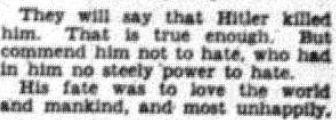
Yet my own research on the death mask – and how it ended up at last in the collection of the Leo Baeck Institute at the Center for Jewish History – suggested another line of interpretation.
Toller’s suicide likely was not a conscious act of political despair. Rather, it was a death driven by a private suffering and tumult existing behind the brave public face and good deeds of a prominent antifascist.
In the final years of his life, Toller was riven with anxiety, exhaustion, and depression. He sought out treatment – in some cases, experimental and controversial therapies – from multiple psychiatrists. In short, Toller was a sick and somewhat desperate man. His suicide might have been a cry for help gone wrong. A terrible accident.
A few who were close to Toller stated these facts quietly in May 1939. They were largely ignored, or evoked his illness as a slackening of willingness to continue the fight. The Audenesque narrative of his suicide took hold.
Indeed, as I discovered in my research, any sort of alternative narrative of Toller's death was suppressed. Many of Toller’s personal papers vanished. No records of his medical treatment were preserved.
The suppression of primary source documents and accounts of his last days lasted for many years after Toller’s suicide. Some of those most closely involved in the events of May 1939 continued an active suppression of what happened for five decades.
In Beauty Doesn’t Reach Me, I explore why the true circumstances of Toller’s suicide were buried in the immediate period surrounding his suicide. Preventing the eruption of a damaging scandal was one reason. The preservation of personal and professional reputations in a fraught moment was another.
Yet evidence that these efforts continued apace for many years after 1939 is growing. Papers that seemed comprehensive in their scope and detail had key omissions. One skilled researcher made mistakes that were fundamentally uncharacteristic of his talents. Yet these mistakes possessed a singular aim: Suppress the name of the creator of the death mask.
Why did ensuring the erasure of events surrounding Toller's suicide matter even after four or five decades? The answer is clear: once you start down the path of suppression, and do so successfully, it is a hard path to quit.
This is especially true when knowing more about who made Ernst Toller’s death mask would lead inevitably to questions that remained potentially damaging in the 1970s:
How did this object come to be made? What happened to it? Who has it now? Why do they have it?
In his 1973 book, God Is Not Yet Dead, Czech philosopher Vitězslav Gardavsky writes:
An element of history which appears to be dead (over and done with, completed), in other words, an event which is “past,” is really weighted down with a series of challenges, and becomes an inspiration in practical terms for new action. It is a driving force which lies hidden outside us, underlying our conscious impulses. So if we study history seriously, we can never be unprejudiced observers, since we are always personally involved. We are anxious to discover beneath the surface of what appears to be a historical reality the challenge which men now dead recorded there when they were alive and fighting.
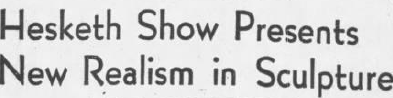
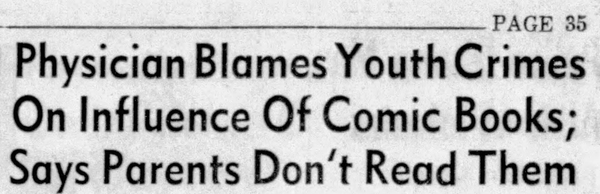
As with any research, I discovered so many new and interesting things as I wrote Beauty Doesn’t Reach Me. Marlene Dietrich’s tart and unsentimental wit. The long-forgotten history of insulin shock therapy. A startling new window into the great anti-comic books crusade of the 1950s. The survival of innovative art created in the 1940s by an unjustly-obscure woman sculptor.
Yet at the heart of the matter is a central question: What does history owe Ernst Toller?
I believe that history owes Ernst Toller the truth – as far as we can discover it.
The decline in Toller’s reputation was significant. It also was staggeringly unjust. Toller’s story is extraordinary. His work in drama, verse and prose deserves greater notice and study – especially in a moment of resurgent fascism and an assault on human liberty, knowledge, and dignity.
Excavating the mechanisms of suppression which helped inflict and sustain this immense reputational damage is essential.
For me, at times, it became personal. As I worked, I saw the stakes as Gardavsky articulates them. To discover new evidence implicates the researcher – and compels us to take up the challenge of bringing it to the public.
Dispelling the shadow around Toller’s death cannot remove the sting of its tragedy. But knowing more allows us to gain a better view of Toller as a person who lived and fought and took up the challenges of his moment.
Check out my personal website and the We Heard You Like Books website for more information, including how you can buy Beauty Doesn’t Reach Me.
Not a subscriber to Stage Write? Sign up here. It's free – and it will stay that way.