Victor Serge: Art and Life
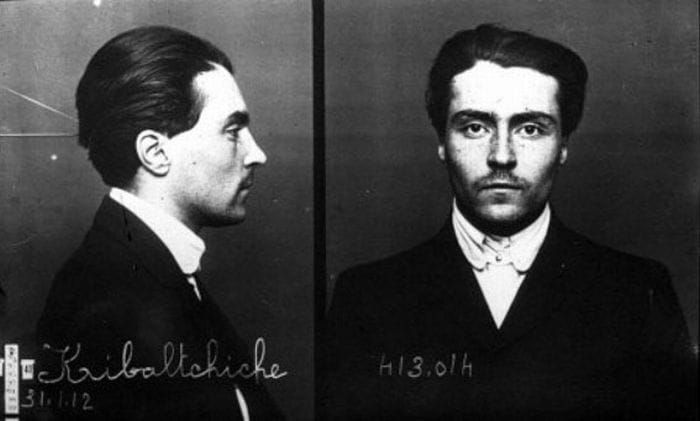
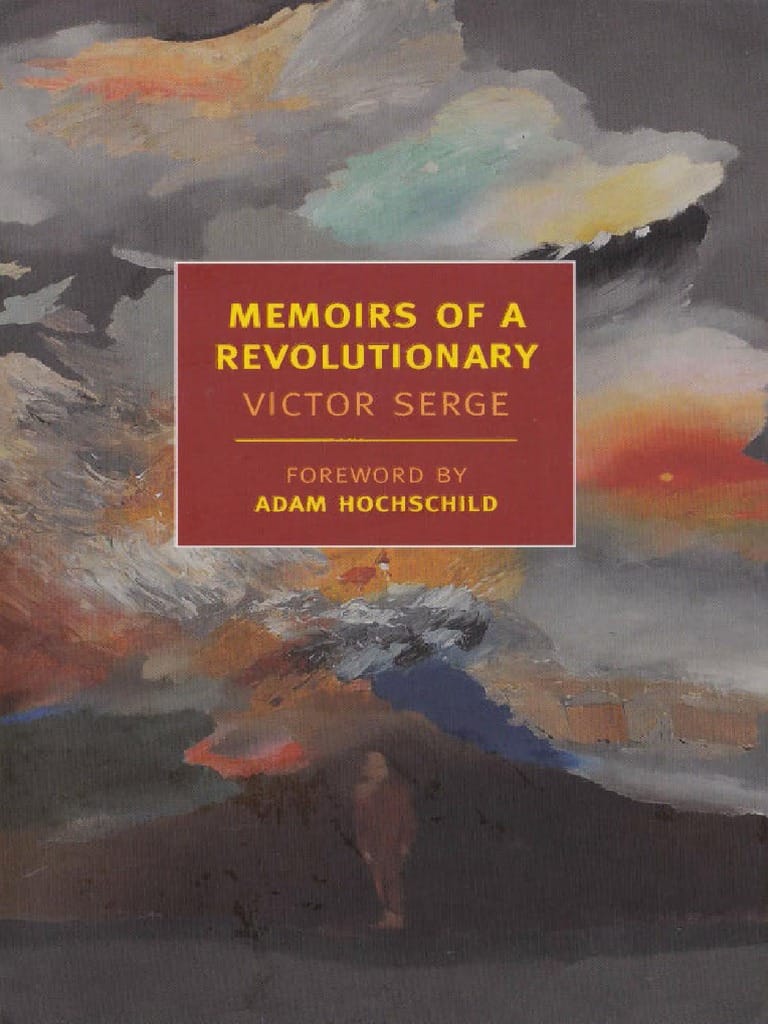
Last week, I published a review of Unruly Revolutionary – Mitchell Abidor's recent biography of Victor Serge – at Zona Motel. The explosion of interest in Serge's writing over the past 30 years has cried out for a comprehensive biography.
Spoiler: My conclusion is that this isn't it.
The first attempt came almost quarter of a century ago: Susan Weissman’s pioneering Victor Serge: The Course is Set on Hope (Verso, 2001). In many aspects, especially its exploration of the writer's tangled connections with anti-Stalinist ferment in France in the 1930s, Weismann's book holds up. Yet it explicitly labels itself as a "political biography" of Serge, and it was written when much of his most important work was not yet available in English translation.
Abidor had the advantages of time and a working relationship with Richard Greeman – who has done more than any other scholar to bring Serge's literary work to English speaking readers. So the fact that I found his biography so unsatisfying despite the significant advances he makes in telling Serge's story represents more than a missed opportunity. Unruly Revolutionary is another "political biography" that brushes brusquely past the literary works at the center of Serge's life from the late 1920s onward.
One bit of information of the many things I wish I could have fit into the review is what readers lose in Abidor's relation of the relationship between Serge and the Romanian Francophone writer Panait Istrati.
Istrati was among the prominent leftist writers who made the journey to the Soviet Union in the late 1920s. He spent a considerable amount of time there on two occasions, accompanied at times by Nikos Kazantzakis – one of the great Greek writers of the 20th Century. (Eleni Kazantzakis includes an invaluable account of this period in her biography of her husband published in 1968 by Simon and Schuster, as well as a contemporaneous account in French that was rescued from immense obscurity and published in French in 2013 as La Véritable tragédie de Panaït Istrati by Éditions Lignes.)
It was during this time that Istrati met Serge. The two men became friends in a fraught and complicated moment, during which Istrati's sense of disappointment in Soviet life as Stalinism took hold (veering eventually into hostility) converged with the authorities' increasing attacks on Serge and his family. This tangle of friendship and politics was made even more complex as Istrati's aggrievement with how the Stalinists sweeping into power were attacking Serge and his family flashed into public view in multiple ways.
Abidor devotes significant space to Istrati and Serge – including the consequences faced by Serge when he refused to condemn Vers l'autre flamme – Istrati's book about the Soviet Union. Yet the biographer offers only the slightest of nods to the fact that the book in question was not produced solely by Istrati, but was rather a three-part effort also including sections by Serge and Boris Souvarine. Why Serge was adamant in his unwillingness to denounce the work seems much clearer in this context.
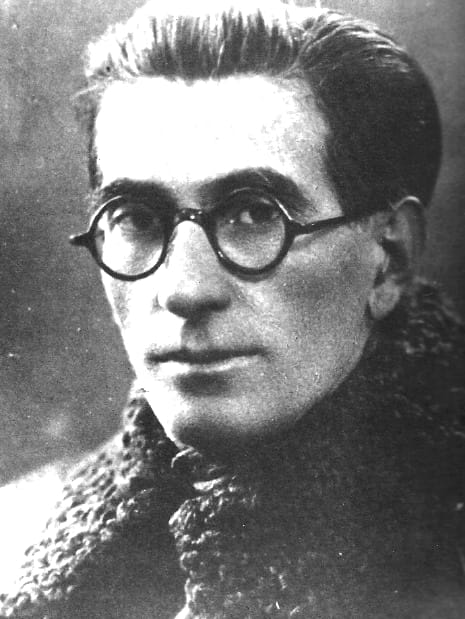
Beyond my quibbles about these passages, however, is the deeper problem which I articulated in the review: a deep disconnection between Serge's life and his art.
Abidor does not bring readers into the text of one of Serge's greatest poems: "Death of Panait" ("Mort de Panait"). This extraordinary elegy distills all the complications of their friendship into a work of art of astonishing empathy, purity and clarity. This excerpt from the poem – translated by James Brook in his collection of Serge's verse, A Blaze in the Desert – demonstrates clearly why we cannot assess the life of Victor Serge in the absence of careful consideration of his literary work:
Your last unfinished pages pull away from you
like a flight of doves
darkness and ashes, return to darkness, return to ashes--
you'd like to cry, but that's not possible, oh sure, cry, you must be joking!
You stumble, the road's burning stones slip from under your feet,
"hold me up, gracious friends!" -- Hold him up, gracious friends, hold him up,
the sky is blinding, oh, what heartbreak!
You go off between two goddesses, they reassure you, they lead you away,
consoling you,
solitude, friendship.
Not a subscriber to Stage Write? Sign up here. It's free – and it will stay that way.